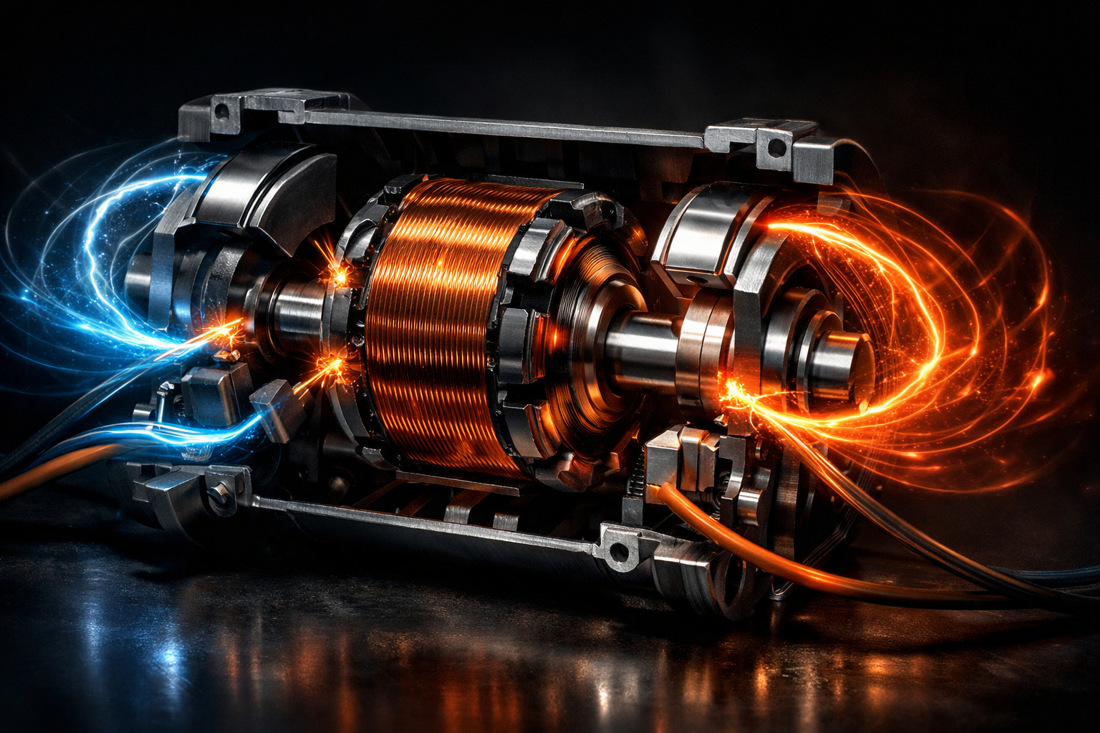
An electric motor converts electrical energy into mechanical energy through electromagnetic induction, where electric current generates a magnetic field that rotates a rotor.
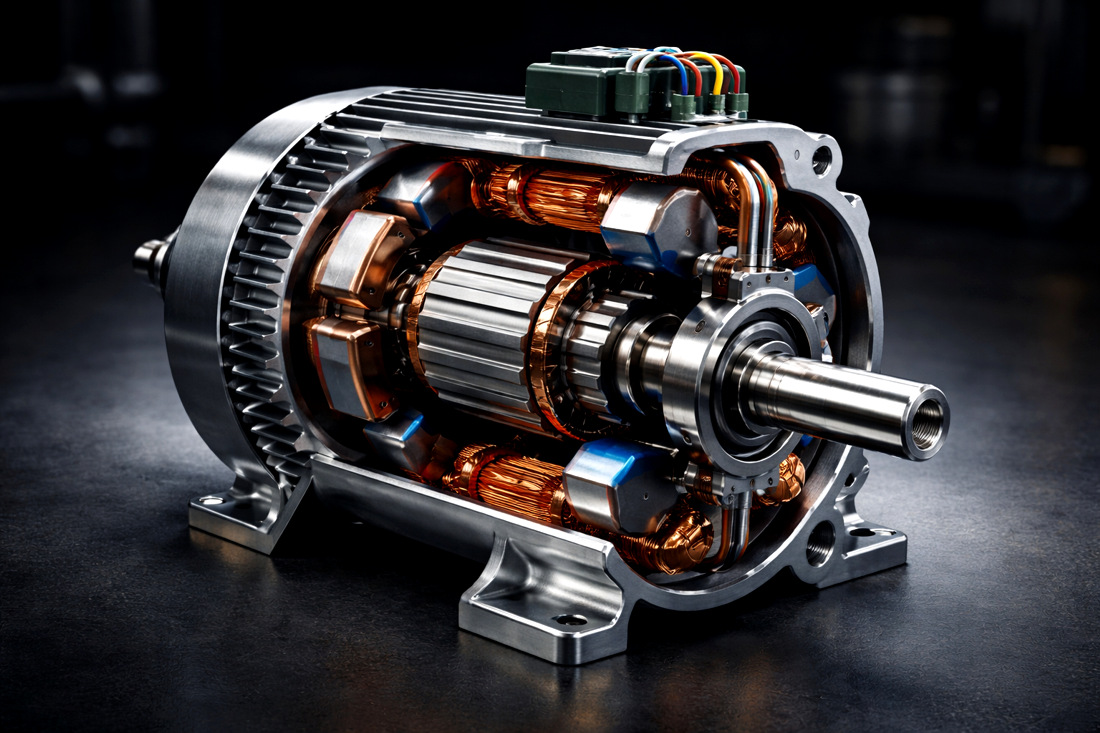
At the heart of the electric motor is the stator and rotor arrangement. The stator is the stationary part of the motor, which contains coils of wire or permanent magnets, meanwhile the rotor is the rotating component placed within the stator. In many motors, the stator's magnetic field is created by either winding wire coils with electrical current or using permanent magnets. The interaction between the stator's magnetic field and the rotor generates a torque that causes the rotor to turn. This rotation can then be utilized to perform work, such as turning a fan, moving a vehicle, or driving machinery.
To understand how an electric motor works in more detail, it's necessary to contemplate the role of the electromagnetic force. When the current flows through the stator's coils, it creates a magnetic field that induces a force on the rotor. This occurs because of the Lorentz force, which states that a current-carrying conductor placed in a magnetic field experiences a force perpendicular to both the direction of the current and the magnetic field. Consequently, this force results in the rotor's rotation. The motor's design is such that the rotor continues to turn as long as electrical current is supplied, and the interaction between the magnetic fields remains effective.
Notes
Electric motors can be broadly categorized into two types: alternating current (AC) motors and direct current (DC) motors. AC motors are powered by alternating current, which periodically reverses direction. They are widely used in household appliances and industrial applications. In contrast, DC motors run on direct current, which flows in a single direction. They often feature a commutator that reverses the current direction in the rotor, ensuring that the torque remains consistent in one direction. Each type of motor has its advantages and specific applications depending on the conditions for speed, efficiency, and control.
One of the key components in many electric motors is the commutator, especially in DC motors. The commutator is a rotary switch that reverses the current direction in the rotor windings, allowing the rotor to continue spinning in the same direction. This action is critical in ensuring that the motor generates continuous rotational motion. Additionally, in AC motors, the rotor may be designed as a squirrel cage or other configurations, which help to optimize performance. The efficiency of electric motors has improved significantly over the years, driven by advancements in materials and technology. These improvements have led to more efficient designs that consume less energy and produce less heat, making electric motors increasingly popular for a wide range of applications.
Another vital aspect of electric motors is their control systems. Modern electric motors often incorporate sophisticated control mechanisms to regulate speed and torque. These systems may include variable frequency drives (VFDs) for AC motors, which adjust the frequency of the electricity supplied to the motor, thereby controlling its speed. Similarly, DC motors can be controlled through pulse-width modulation (PWM) techniques, which modulate the voltage supplied to adjust the motor's operation. These advancements in motor control enable precise and efficient operation for applications ranging from robotics to electric vehicles.
Electric motors are crucial components in a multitude of devices, converting electrical energy into mechanical energy. The operation of an electric motor involves several key principles and components. Below is a detailed enumeration of how electric motors work:
Electric motors are widely used in various applications, including household appliances like washing machines, potency tools, electric vehicles, and industrial machinery for automation.
In the automotive industry, electric motors are becoming increasingly prominent, particularly with the rise of electric vehicles (EVs). These vehicles utilize electric motors for propulsion, enabling them to operate without traditional internal combustion engines. Electric motors in EVs are designed to deliver high torque and efficiency, making them capable of providing instant acceleration. This technology not only reduces greenhouse gas emissions but also offers a quieter and smoother driving experience. Moreover, electric motors are also used in hybrid vehicles, where they complement gasoline engines to enrich fuel efficiency and reduce emissions.
Another significant area where electric motors are used is in industrial applications. Factories and manufacturing plants employ electric motors to might conveyor belts, pumps, fans, and machinery. These motors are indispensable for automating processes, improving productivity, and ensuring safe and consistent operations. For instance, electric motors drive robotic arms in assembly lines, performing tasks with precision and speed that would be challenging for human workers. Additionally, in heavy industries such as mining and construction, electric motors are used to operate large equipment, further showcasing their importance in various sectors.
Electric motors are also essential in the field of HVAC (heating, ventilation, and air conditioning) systems. In these systems, electric motors control fans and pumps to circulate air and regulate temperature. They are critical for maintaining comfortable indoor environments in residential, commercial, and industrial buildings. Energy-efficient electric motors have been developed to reduce force consumption, contributing to lower utility bills and a smaller carbon footprint. This trend towards efficiency is becoming increasingly important as energy conservation and sustainability become top priorities globally.
Pertaining to robotics, electric motors are fundamental components that allow robots to perform a wide range of tasks. From simple household robots that vacuum floors to complex industrial robots that assemble products, electric motors provide the necessary movement and control. The precise operation of electric motors enables robots to handle delicate tasks, navigate their environments, and adapt to various conditions. As technology advances, the integration of electric motors in robotics continues to evolve, leading to more sophisticated and capable automated systems.
Furthermore, electric motors find applications in the entertainment industry, particularly in audio and visual equipment. Speakers, projectors, and cameras rely on electric motors to function effectively. In speakers, for instance, electric motors drive the diaphragm to produce sound, whereas cameras utilize motors to adjust focus and zoom. The efficiency and reliability of electric motors improve the overall performance of these devices, providing consumers with high-quality experiences in music, film, and photography.
| Application Area | Description | Common Use Cases | Types of Electric Motors | Energy Efficiency |
|---|---|---|---|---|
| Household Appliances | Electric motors are integral to many household appliances, converting electrical energy into mechanical energy to perform tasks. Devices such as washing machines, vacuum cleaners, and food processors rely on motors for efficient operation. | Washing machines utilize electric motors for both spinning and agitating, even though vacuum cleaners use them to create suction. | Common types include induction motors and universal motors, each selected for its specific application. | Modern electric motors are designed to consume less power, offering significant energy savings in daily use. |
| Industrial Machinery | In manufacturing and industrial settings, electric motors play a indispensable role in driving machinery and equipment. They are fundamental for operations such as conveyor systems, pumps, and lathes, providing reliable performance and precision. | Electric motors are found in conveyor belts for material handling and in robotic arms for automated tasks. | Types like servo motors and stepper motors are frequently used for their ability to provide precise control in applications. | Energy-efficient motors can significantly reduce operational costs in industrial environments. |
| Transportation | Electric motors are key components in various forms of transportation, including electric vehicles and public transit systems. They provide the necessary torque and acceleration for smooth operation, contributing to the shift towards sustainable transport solutions. | Electric cars and buses utilize electric motors for propulsion, supported by regenerative braking systems to boost efficiency. | Brushless DC motors are commonly employed in electric vehicles for their high efficiency and low maintenance needs. | Electric transportation helps reduce carbon emissions, aligning with environmental goals. |
| Robotics | Electric motors are fundamental to robotics, enabling movement and manipulation. They are used in robotic arms, drones, and automated guided vehicles, allowing precise control and versatility in various tasks. | In manufacturing, robotic arms equipped with electric motors can perform tasks such as welding, painting, and assembly with high precision. | Different motor types, including stepper and servo motors, are selected based on the application's necessary criteria for speed and accuracy. | Energy-efficient motors contribute to longer operational times and reduced electricity consumption in robotic systems. |
The electric motor was invented in the early 19th century, with key contributions from figures like Michael Faraday and Joseph Henry, culminating in widespread use by the 1830s.
One of the earliest concepts leading to the electric motor came from the work of Italian scientist Alessandro Volta, who, in 1800, created the voltaic pile, the first true battery. This invention allowed for a continuous and stable source of electric current. Volta's work paved the way for future inventors to investigate the applications of electricity. At the same time, Hans Christian Oersted discovered the relationship between electricity and magnetism in 1820, which would become essential for the development of electric motors. Oersted demonstrated that an electric current could produce a magnetic field, a discovery that sparked curiosity and experimentation among scientists and inventors.
The first true electric motor was demonstrated in 1821 by British scientist Michael Faraday. Faraday created a simple device that rotated when an electric current was passed through a coil of wire situated in a magnetic field. His work fundamentally illustrated the principles of electromagnetic rotation and laid the groundwork for the electric motor. Faraday's experiment, while rudimentary, showcased the potential of using electricity to create mechanical motion. He is regarded as a key figure in the development of electrical engineering, and his contributions to the perception of electromagnetism cannot be overstated.
Following Faraday's pioneering work, various inventors attempted to create practical versions of the electric motor. In 1832, American inventor Thomas Davenport built an electric motor that was used to command a small model car, demonstrating its practical applications. Davenport's motor, though not widely adopted at the time, was a significant step toward the development of more efficient and reliable electric motors. Meanwhile, in Europe, numerous inventors were working independently on similar designs, showcasing the growing interest in utilizing electricity for mechanical purposes.
In 1834, a significant advancement was made by another American inventor, Joseph Henry, who developed a more sophisticated version of the electric motor. Henry's design included improvements in the use of electromagnetism, which made the motor more efficient. His contributions to the grasp of inductance and electromagnetism also set the stage for future advancements in electrical technology. The innovations of these early inventors laid a solid foundation for the electric motors that would dominate the industrial age.
The development of the electric motor took a indispensable leap forward thanks to the work of Nikola Tesla in the late 19th century. Tesla's invention of the alternating current (AC) motor overhauled the design and function of electric motors. His designs allowed for efficient transmission of electricity over long distances, making it possible to influence homes and industries with electricity generated from centralized plants. With his numerous patents and theoretical contributions, Tesla became one of the most influential figures in the electrical engineering field, and his work on the AC motor remains foundational in modern electrical systems.
By the turn of the 20th century, electric motors were becoming increasingly common in various applications, from household appliances to industrial machinery. The combination of advances in engineering, materials, and electrical systems helped propel the electric motor into mainstream use. Companies began to produce electric motors in large quantities, leading to their widespread adoption in various sectors. The impact of the electric motor on society cannot be understated, as it fundamentally altered how individuals worked and lived, paving the way for an electrified world.
There are several types of electric motors, including AC motors, DC motors, stepper motors, and servo motors, each suited for specific applications and operational requirements.
One of the most common types of electric motors is the direct current (DC) motor. These motors operate on direct current electricity and are widely used in applications where precise speed control is essential. DC motors typically consist of a stator, rotor, and commutator. By reversing the direction of current through the windings, the motor can change its rotational direction. Applications of DC motors include robotics, electric vehicles, and small home appliances. In particular, they are favored for their ability to provide high torque at low speeds, making them suitable for many applications requiring controlled movement.
Another widely used type of electric motor is the alternating current (AC) motor. AC motors are further divided into two main categories: synchronous and asynchronous motors. Synchronous motors operate at a constant speed determined by the frequency of the AC authority supply. They are used in applications requiring precise speed regulation, such as in clocks and industrial machinery. On the other hand, asynchronous motors, also known as induction motors, are simpler and more robust. They operate at a speed that is slightly less than the synchronous speed, making them ideal for applications like fans, pumps, and compressors.
Stepper motors represent another significant category of electric motors, particularly in applications involving precise positioning and control. Stepper motors divide a full rotation into a series of discrete steps, allowing for accurate control of angular position. This makes them ideal for applications such as 3D printers, CNC machines, and robotics. Stepper motors can be driven in both unipolar and bipolar configurations, each offering different performance characteristics. Their ability to maintain a specific position without the need for feedback makes them highly valuable in various automation tasks.
Brushless DC motors (BLDC) are a newer class of electric motors that have gained popularity owing to their efficiency and durability. Unlike traditional DC motors, BLDC motors do not use brushes and commutators, which reduces maintenance and increases lifespan. They operate by using electronic controllers to switch the current in the motor windings, allowing for smooth and efficient operation. Common applications for brushless DC motors include computer cooling fans, electric bicycles, and drones. Their high efficiency and performance make them a preferred choice in many modern applications.
Another type of electric motor is the universal motor, which can operate on both AC and DC power. Universal motors are widely used in portable dominance tools and household appliances like blenders and vacuum cleaners. They are characterized by their ability to achieve high speeds and generate significant torque in a compact form factor. In spite of their advantages, universal motors tend to be less efficient than other motor types, and they can generate noise as a result of the brushes in operation.
Lastly, there are specialty motors designed for niche applications. For example, linear motors produce linear motion instead of rotational motion and are used in conveyor systems and maglev trains. Additionally, submersible motors are designed for operation underwater, commonly used in applications such as pumps for wells and aquariums. These specialty motors cater to specific needs, often addressing unique challenges that standard motors cannot fulfill.